
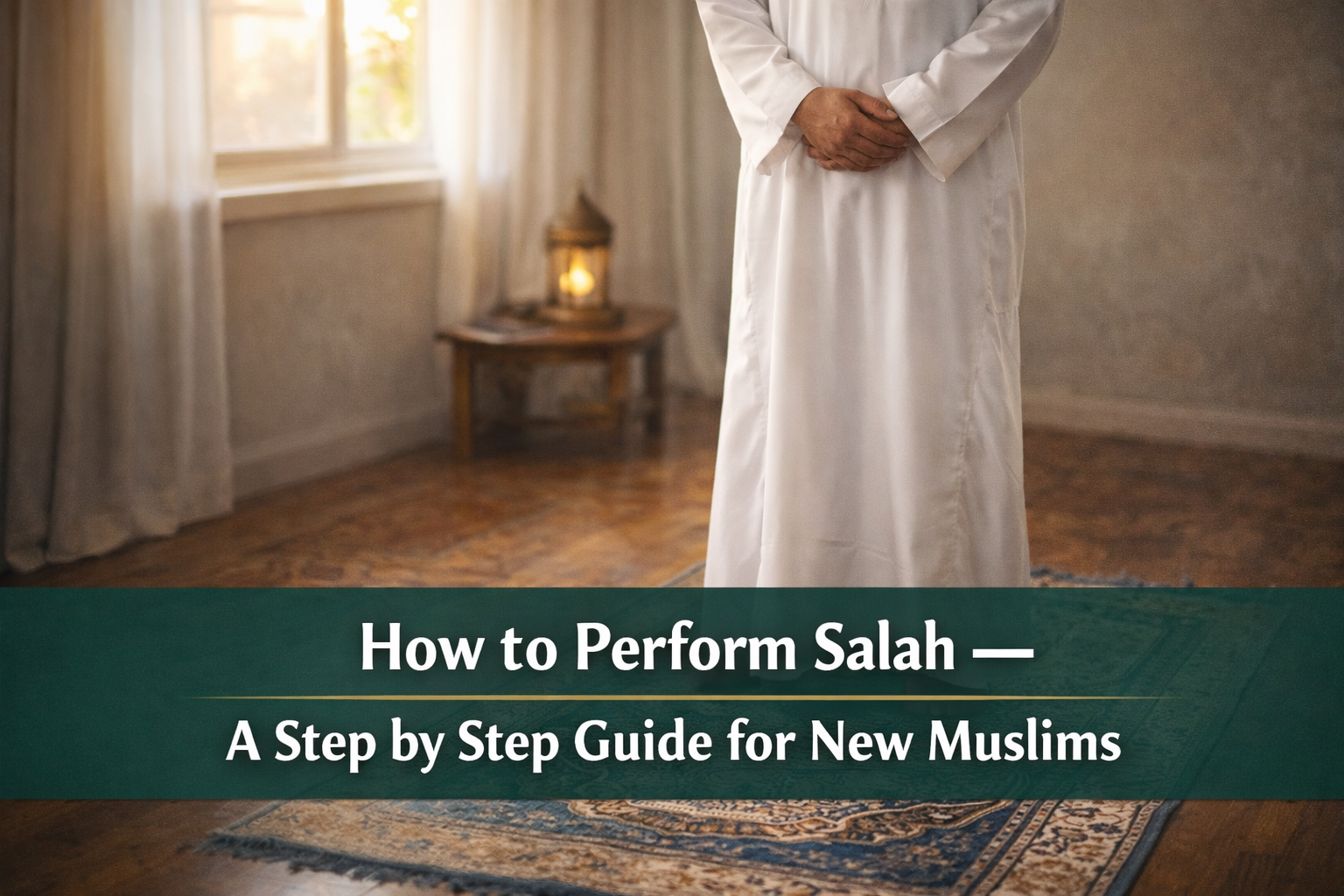

How-to perform salah step by step a complete guide for new muslims
You have taken your Shahada. You believe in Allah (SWT) and His Messenger ﷺ. And now one of the first things every new Muslim is told is: you need to pray five times a day.
But nobody hands you a manual.
What do you say? What do you do with your hands? How do you know which direction to face? What happens if you make a mistake?
These are real questions that every new Muslim has, and there is absolutely no shame in asking them. The Prophet ﷺ himself taught his companions how to pray in detail, and seeking that knowledge is an act of worship in itself.
This guide will walk you through everything you need to know to begin praying with confidence.
What Is Salah and Why Is It the Second Pillar of Islam?
Salah (صَلاة) is the Arabic word for the formal prayer that every Muslim performs five times daily. It is the second pillar of Islam, coming directly after the Shahada (testimony of faith), and it is the most consistent and direct form of communication between a believer and Allah (SWT).
The Prophet ﷺ described Salah as the pillar of the religion. He also said that the first thing a person will be asked about on the Day of Judgement is their prayer. If it is sound, everything else will be sound. If it is not, everything else will suffer.
Salah is not a ritual performed out of obligation alone. It is a conversation. Five times every day, you stand before the Creator of the universe, speak His words, and remind yourself of who you are and who He is. For many Muslims, Salah becomes the most grounding, stabilising part of their entire day.
What You Need Before You Pray
Before you begin Salah, three things need to be in place.
Taharah (Ritual Purity) You must be in a state of ritual purity before praying. This is achieved through Wudu (ablution), which is a specific washing of the body using clean water. If a person is in a state of major impurity (Janabah), a full bath (Ghusl) is required before praying.
Knowing the Qibla (Direction of Prayer) All Muslims around the world face the Kaaba in Makkah when they pray. This direction is called the Qibla. You can find the Qibla direction using a Qibla compass, a mosque prayer app, or by asking a local Muslim. In most mosques, the Qibla direction is already marked.
Niyyah (Intention) Before each prayer, you make a silent intention in your heart that you are about to perform this specific prayer for the sake of Allah. The intention does not need to be spoken aloud — it is a matter of the heart.
How to Perform Wudu (Ablution)
Wudu is the ritual washing performed before Salah. Here are the steps in order:
Begin by saying Bismillah (in the name of Allah). Wash both hands up to the wrists three times. Rinse the mouth three times. Sniff water into the nostrils and blow it out three times. Wash the entire face three times. Wash both arms up to and including the elbows three times, starting with the right arm. Wipe the head once with wet hands, passing them from the front of the head to the back. Wipe the ears once with wet fingers. Wash both feet up to and including the ankles three times, starting with the right foot.
Wudu is broken by using the toilet, passing wind, bleeding heavily, sleeping, or losing consciousness. When Wudu is broken, it must be renewed before the next prayer.
The Five Daily Prayers and Their Times
The five obligatory prayers are:
Fajr is the dawn prayer, performed between the first light of dawn and sunrise. It consists of 2 Rakahs (units of prayer).
Dhuhr is the midday prayer, performed after the sun passes its highest point until mid-afternoon. It consists of 4 Rakahs.
Asr is the afternoon prayer, performed from mid-afternoon until just before sunset. It consists of 4 Rakahs.
Maghrib is the sunset prayer, performed just after sunset until the red light disappears from the sky. It consists of 3 Rakahs.
Isha is the night prayer, performed from the disappearance of the twilight until midnight (or in some scholarly opinions, until just before Fajr). It consists of 4 Rakahs.
Prayer times shift daily based on the position of the sun, so most Muslims use a prayer times app or a local mosque schedule to stay on time.
Step-by-Step: How to Pray One Rakah
A Rakah is one complete unit of prayer. Most prayers consist of multiple Rakahs performed in sequence. Here is how one Rakah is performed:
Takbiratul Ihram: Stand upright facing the Qibla, raise both hands to the level of your shoulders or earlobes, and say “Allahu Akbar” (Allah is the Greatest). This officially begins the prayer.
Qiyam (Standing): Place your right hand over your left on your chest. Recite the opening supplication (Du’a Al-Istiftah) silently, then Surah Al-Fatiha aloud or silently depending on the prayer, followed by any other Surah or verses you know.
Ruku (Bowing): Say “Allahu Akbar,” bow with your back straight and hands on your knees, and say “Subhana Rabbiyal Adheem” (Glory be to my Lord, the Most Great) three times.
Standing after Ruku: Rise from bowing, say “Sami Allahu liman hamidah” (Allah hears those who praise Him), then say “Rabbana lakal hamd” (Our Lord, to You belongs all praise).
First Sujood (Prostration): Say “Allahu Akbar” and go down to prostrate with your forehead, nose, both palms, both knees, and toes touching the ground. Say “Subhana Rabbiyal A’la” (Glory be to my Lord, the Most High) three times.
Sitting between the two Sujoods: Rise from prostration saying “Allahu Akbar,” sit briefly, and say “Rabbighfirli” (My Lord, forgive me).
Second Sujood: Prostrate again as before, saying “Subhana Rabbiyal A’la” three times.
This completes one Rakah. For prayers with multiple Rakahs, you return to standing and repeat the process. At the end of the final Rakah, you sit for the Tashahhud, send blessings upon the Prophet ﷺ, and end the prayer with Tasleem by turning your head to the right and saying “Assalamu Alaikum wa Rahmatullah,” then to the left and saying the same.
Common Mistakes New Muslims Make in Prayer
Not knowing the Qibla direction precisely is common in the beginning. Use a reliable app and do your best — Allah (SWT) is merciful to those who are sincere and learning.
Rushing through the movements is something many beginners do out of nervousness. The Prophet ﷺ emphasised stillness and calm in each position. Take your time.
Forgetting how many Rakahs you have prayed happens to everyone, including experienced Muslims. If you are unsure, assume the lower number and add the missed Rakah. There is a specific prostration of forgetfulness (Sujood Al-Sahw) for this situation, which you will learn as you progress.
Praying without Wudu by accident is easily remedied. Simply renew your Wudu and repeat the prayer.
Your Next Steps
Learning to pray is a journey, and every new Muslim goes through the same beginning. Be patient with yourself. Allah (SWT) sees your effort, your sincerity, and your intention — and He rewards all of it.
At Al-Badry Academy, our New Muslim Converts Course covers Salah in detail alongside all the other essentials of Islamic practice — Wudu, Aqeedah, basic Quran recitation, and the fundamentals of Islamic life. It is taught by caring, qualified instructors who understand exactly what new Muslims need and deliver it with patience and warmth.
We also offer New Shahada Classes specifically designed for those who have just embraced Islam and need a guided, supportive starting point.
If you would like to learn to recite the Quranic verses used in Salah correctly, our Quran Recitation Course is an excellent companion to your prayer learning.
You can explore all of Al-Badry Academy’s Islamic Classes to find the programme that fits where you are right now.
Book your free trial class today and let one of our qualified teachers guide you through your first steps in Islam with knowledge, care, and confidence.
Explore more: Islamic Classes For Adults View Pricing Plans About Al-Badry Academy