

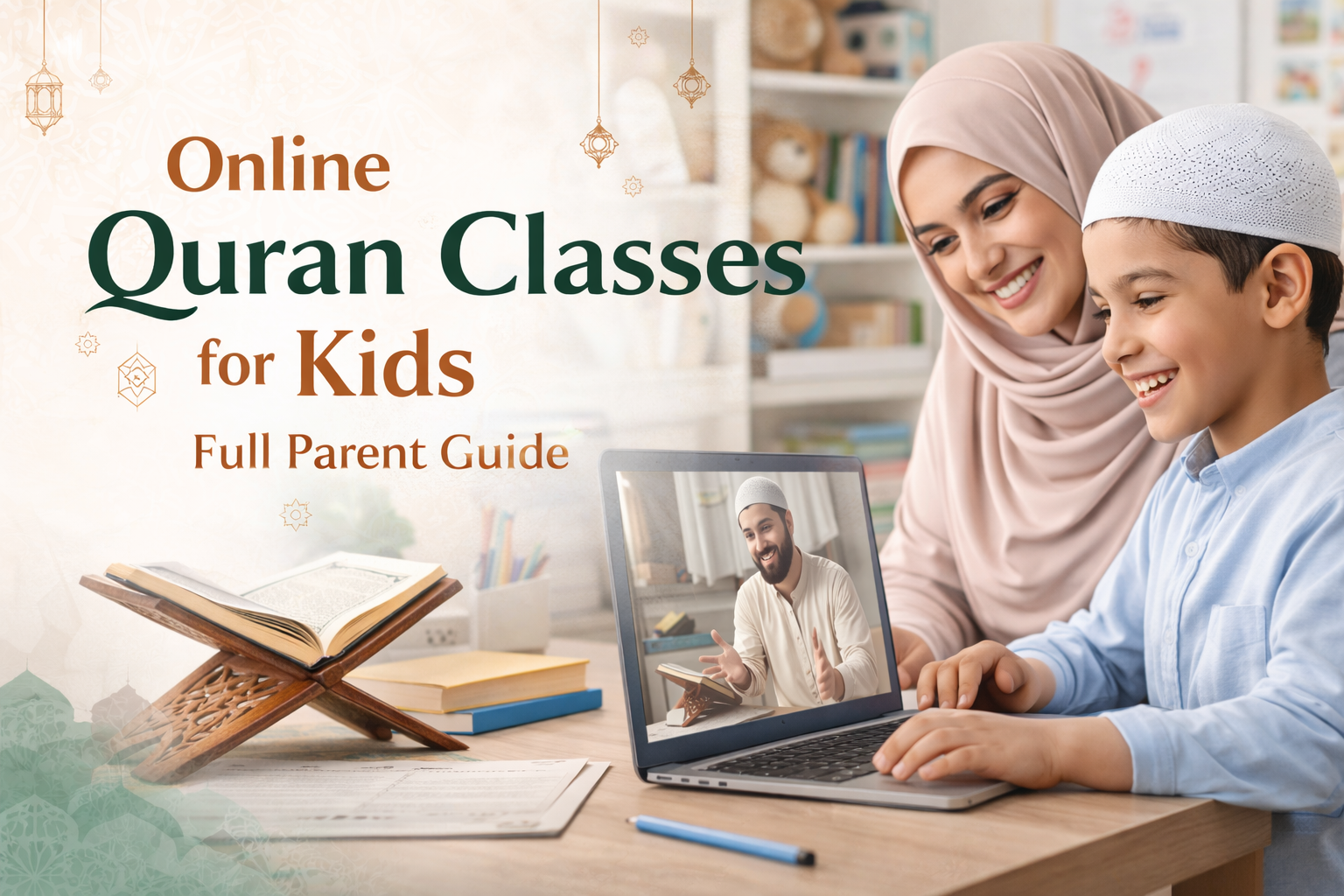

As a parent, few responsibilities feel as profound as guiding your child toward a meaningful connection with the Quran. You want your children to grow up loving Allah’s words, understanding their faith, and carrying the light of Islamic knowledge throughout their lives. But in today’s busy world, finding the right approach to Quranic education can feel overwhelming. Between school schedules, extracurricular activities, and limited access to quality local teachers, many parents wonder how to give their children the Quranic foundation they deserve.
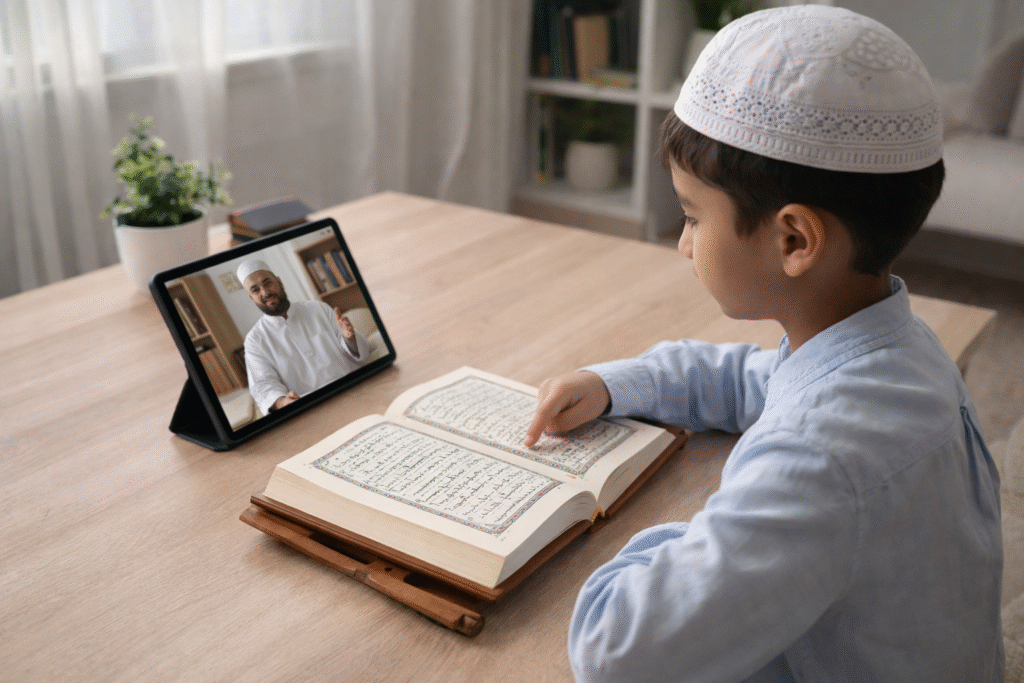
Online Quran classes for kids have emerged as a powerful solution, bringing qualified teachers, structured curriculum, and flexible scheduling directly into your home. This comprehensive parent guide walks you through everything you need to know about online Quran education for children, from choosing the right program to supporting your child’s learning journey effectively.
Why Online Quran Classes Work Exceptionally Well for Children
Traditional Quran education often required families to navigate complicated logistics, finding local teachers with proper qualifications, arranging transportation to mosques or Islamic centers, and working around fixed class schedules that might not suit your family’s routine. Online Quran classes eliminate these barriers while offering unique advantages specifically beneficial for children’s learning styles.
Learning in a Comfortable, Familiar Environment
Children learn best when they feel safe and comfortable. Quran classes conducted online allow your child to study in their own home, surrounded by familiar things. This comfort reduces anxiety, especially for shy children who might feel intimidated in group settings or unfamiliar locations.
When children don’t have to worry about being watched by peers or feeling embarrassed about mistakes, they participate more freely. They ask questions without hesitation, repeat difficult pronunciations without self-consciousness, and engage more authentically with the learning process. This psychological safety accelerates progress significantly.
One-on-One Attention That Adapts to Individual Needs
Unlike crowded mosque classes where one teacher manages ten or fifteen students simultaneously, quality online programs prioritize individualized instruction. Your child receives the teacher’s complete focus during their lesson time, with curriculum pacing adjusted specifically to their learning speed.
Some children grasp Arabic letters quickly but need extra practice with certain Tajweed rules. Others might excel at memorization but struggle with reading fluency. Individual attention means teachers can identify and address these specific needs without the constraints of group instruction.
Flexible Scheduling for Modern Family Life
Between school, homework, sports, and family time, finding windows for Quran education can feel like solving a complex puzzle. Online classes offer scheduling flexibility that traditional programs simply cannot match. Whether your child learns best in the morning before school, in the afternoon after homework, or on weekends, you can find time slots that genuinely work for your family’s rhythm.
This flexibility also extends to consistency. When you don’t have to drive across town in traffic or weather conditions, maintaining regular classes becomes much easier. Consistency is critical for children’s Quran learning, and online education removes many obstacles to regular attendance.
Access to Qualified Native Arabic Speakers
Your location no longer limits your access to qualified teachers. Through online platforms like Albadry Academy, children in the USA, UK, Canada, Australia, or anywhere else can learn from certified native Arab instructors who bring authentic pronunciation and deep understanding of Islamic education.
These teachers aren’t just fluent in Arabic; they’re specifically trained to teach non-Arabic speaking children using methods designed for young learners. This combination of native expertise and child-focused pedagogy creates an ideal learning environment.
Understanding Your Child’s Readiness for Quran Learning
One of the most common questions parents ask is: “When should my child start Quran classes?” While there’s no universal answer, understanding developmental readiness helps you make the right decision for your specific child.
The Ideal Age Range: 4 to 7 Years Old
Most Islamic education experts recommend beginning formal Quran education between ages four and seven. This window represents a sweet spot where children have developed sufficient attention span, basic listening skills, and the cognitive capacity to begin recognizing letters and patterns, yet their minds remain incredibly receptive to new language acquisition.
Children’s brains during these early years possess remarkable neuroplasticity, meaning they form and strengthen neural connections much more easily than older children or adults. This makes early childhood an ideal time for learning Arabic script and pronunciation, which can seem daunting to learners who start later.
However, this doesn’t mean three-year-olds can’t benefit from Quranic exposure or that eight-year-olds have missed their opportunity. It simply indicates the general age when formal, structured lessons tend to be most effective.
Signs Your Child Is Ready to Begin
Rather than focusing solely on age, observe your child’s individual readiness indicators. A child who is ready for Quran classes typically:
- Can sit attentively for 15-20 minutes at a time
- Shows interest in books, letters, or religious activities
- Can follow simple instructions consistently
- Demonstrates basic listening skills
- Expresses curiosity about the Quran or Islamic practices they observe
If your child struggles with these basic readiness markers, waiting a few months while building these foundational skills might lead to more successful learning when formal classes begin.
Pre-Learning Activities for Younger Children
Even before formal Quran classes, you can prepare younger children (ages 2-4) through informal exposure that builds familiarity and positive associations. Play Quranic recitation softly in your home, particularly during calm times or before sleep. Tell age-appropriate stories of the Prophets, emphasizing moral lessons in simple terms. Show enthusiasm when you read or recite Quran yourself, modeling the love and respect you want them to develop.
These early experiences create a foundation of comfort and positive feelings around the Quran, making formal learning feel like a natural progression rather than something entirely new and potentially intimidating.
What Children Actually Learn in Quality Online Quran Programs
Understanding the curriculum structure helps you set appropriate expectations and support your child’s progress effectively. Quality online Quran programs for kids follow a carefully sequenced approach that builds skills systematically.
Foundation Stage: Noorani Qaida and Arabic Alphabet
For children with no prior Arabic exposure, the journey begins with foundational courses like the Noorani Qaida Course. This systematic program introduces the Arabic alphabet, letter recognition in different positions, and basic pronunciation rules.
Think of Noorani Qaida as learning the ABCs before reading books. Children learn to recognize each Arabic letter, understand how letters change shape depending on their position in words, and practice the sounds each letter makes. This stage typically includes:
- Individual letter recognition and pronunciation
- Letter joining and word formation
- Short vowel sounds (Fatha, Kasra, Damma)
- Long vowel sounds (Madd)
- Basic Sukoon and Tanween
- Simple Tajweed foundations
Most children complete this foundational stage in three to six months with regular classes, though the pace varies based on prior exposure and individual learning speed. The goal isn’t rushing through but ensuring solid mastery of each concept before advancing.
Reading and Recitation Development
Once children have grasped basic letter recognition and can form simple words, they transition to reading actual Quranic text. The Quran Recitation Course focuses on developing fluency, accuracy, and confidence in reading directly from the Mushaf.
This stage is tremendously exciting for children because they’re now engaging with the actual Quran rather than practice materials. Teachers typically begin with shorter, simpler Surahs from the end of the Quran (Juz Amma), gradually progressing to longer, more complex passages as skills develop.
Children learn to read smoothly without constant hesitation, recognize frequently occurring words instantly, and apply pronunciation rules automatically. The emphasis is on building both accuracy and natural flow in recitation. For those ready to advance further, the Quran Reading Course provides structured progression through different levels of reading proficiency.
Tajweed Rules and Beautiful Recitation
Proper Tajweed transforms basic reading into beautiful, correct recitation as the Quran was revealed. The Tajweed Rules Course introduces children to specific pronunciation rules that govern Quranic recitation.
For kids, Tajweed instruction focuses on practical application rather than overwhelming theoretical detail. Teachers introduce concepts like:
- Makharij (articulation points of letters)
- Rules of Noon Sakinah and Tanween (Ikhfa, Iqlab, Idgham, Izhar)
- Rules of Meem Sakinah
- Qalqalah (echoing sound)
- Rules of Madd (elongation)
- Characteristics of letters (Sifaat)
Quality instruction makes these rules understandable and memorable through practice, repetition, and child-friendly explanations. The goal isn’t perfection immediately but gradual improvement and developing an intuitive sense for correct pronunciation.
Quran Memorization (Hifz)
Many parents want their children to memorize portions of the Quran, either specific essential Surahs for daily prayers or more extensive memorization. The Quran Memorization Program provides structured approaches specifically designed for children’s cognitive abilities.
Effective children’s memorization programs typically begin with shorter Surahs that are both manageable and practically useful. Children might start memorizing Surah Al-Fatihah, followed by the last ten or twenty Surahs of the Quran. These shorter chapters are easier for young minds to grasp while providing verses they can use in their daily prayers.
Quality memorization instruction includes techniques like repetition strategies, review schedules, and methods for connecting verses together. Teachers help children understand that memorization isn’t just mechanical repetition but involves understanding meanings, recognizing patterns, and building genuine connections with the verses.
Choosing the Right Online Quran Academy for Your Child
Not all online Quran platforms provide the same quality of instruction or child-friendly approach. Several critical factors distinguish excellent programs from mediocre ones when it comes to teaching children.
Teacher Qualifications and Child-Focused Training
The most important factor in your child’s success is their teacher. Look for platforms that employ instructors who are both Islamically qualified and specifically trained to work with children. Albadry Academy carefully selects teachers who are:
- Native Arabic speakers with authentic pronunciation
- Formally educated in Islamic sciences and Quranic studies
- Certified in teaching Tajweed and Quranic recitation
- Specially trained in child pedagogy and age-appropriate teaching methods
- Patient, encouraging, and skilled at maintaining children’s interest
Native Arab instructors provide the authentic pronunciation that builds correct habits from the beginning. However, native speaking alone isn’t sufficient; teachers must also be skilled at explaining concepts in language children understand and using teaching methods appropriate for young learners.
Age-Appropriate Teaching Methods
Children aren’t simply small adults; they require completely different teaching approaches. Effective online Quran programs for kids incorporate methods designed specifically for children’s learning styles, including:
- Visual aids like colorful charts, letter flashcards, and animated presentations
- Interactive activities that keep children engaged
- Positive reinforcement and encouragement rather than criticism
- Short attention span accommodation with varied activities within lessons
- Game-like elements that make learning feel fun rather than tedious
- Story-based learning that connects Quranic concepts to narratives children enjoy
The best programs also recognize that different age groups need different approaches. Teaching a four-year-old requires different techniques than teaching a ten-year-old, and quality academies adjust their methods accordingly.
One-on-One vs. Group Classes
While group classes might seem more social, individual instruction offers overwhelming advantages for children’s Quran learning. In one-on-one online classes:
- The teacher’s attention never diverts to managing other students
- Pacing adjusts precisely to your child’s needs without pressure to keep up or wait for others
- Shy children participate without fear of peer judgment
- The teacher immediately corrects mistakes rather than letting incorrect habits develop
- Lessons can accommodate your child’s specific interests and questions
Albadry Academy emphasizes personalized one-on-one instruction, recognizing that this approach produces dramatically better results for most children.
Trial Classes and Risk-Free Exploration
Before committing to any program, take advantage of trial opportunities. Albadry Academy offers the chance to book a free trial, allowing your child to experience a real lesson with a qualified teacher.
During the trial, observe how your child responds to the teacher’s style, whether they seem comfortable and engaged, and how the lesson is structured. Pay attention to the teacher’s patience, enthusiasm, and ability to maintain your child’s attention. This firsthand experience provides invaluable information that descriptions and reviews cannot capture.
Supporting Your Child’s Quran Learning at Home
Your child’s teacher provides instruction and guidance during lessons, but your role as a parent significantly impacts their overall success and relationship with the Quran. These strategies help you create a home environment that reinforces and extends what your child learns in class.
Creating a Dedicated Learning Space
Designate a specific area in your home for Quran study. This doesn’t require a separate room; a quiet corner with a small desk or table, good lighting, and minimal distractions works perfectly. Having a consistent space helps your child mentally transition into learning mode and shows respect for the sacred knowledge they’re acquiring.
Ensure this space is free from interruptions during lesson times. Siblings should know not to disturb, phones should be silenced, and the area should be organized with necessary materials like the Mushaf, notebook, and any learning aids the teacher provides.
Establishing Consistent Routines
Children thrive on routine and predictability. Establish regular times for Quran classes that become part of your child’s expected schedule, just like school or bedtime. Consistency helps learning become habitual rather than something requiring constant motivation.
Beyond scheduled lessons, incorporate brief daily Quran time into your routine. Even 10-15 minutes of practice reviewing what they’ve learned helps reinforce lessons and build confidence. This could happen after breakfast, before dinner, or at any time that naturally fits your family’s rhythm.
Practicing Between Lessons
While weekly or twice-weekly lessons provide instruction and correction, real progress happens through daily practice. Encourage your child to review their current lesson materials every day, even if only for a short time.
Keep practice sessions brief enough to maintain enthusiasm rather than becoming burdensome. It’s far better to practice for 15 minutes daily with genuine engagement than to attempt hour-long sessions that frustrate everyone involved. Quality and consistency matter more than duration.
Celebrating Progress and Milestones
Children need encouragement and acknowledgment of their efforts. Celebrate achievements, whether completing the alphabet, reading their first Surah independently, or memorizing specific verses. These celebrations don’t need to be elaborate; genuine enthusiasm, praise, and recognition of their hard work provide powerful motivation.
Create simple reward systems appropriate for your child’s age. Sticker charts tracking completed lessons, small treats after memorizing a Surah, or special privileges for consistent practice all help maintain motivation. The rewards should feel proportionate to the achievement without creating expectations that learning requires material compensation.
Leading by Example
Children absorb their environment and model what they observe. When they see you reading Quran regularly, treating the Mushaf with respect, and expressing love for Allah’s words, they internalize these attitudes naturally.
Make Quran reading visible in your daily life. Recite in their presence, share what you’re learning, discuss Quranic stories and meanings in age-appropriate ways, and demonstrate that Quranic education is valuable for adults too, not just children’s schoolwork.
Managing Challenges with Patience
Every child encounters difficulties during their Quran learning journey. Some struggle with specific letters or sounds, others resist practice, and many experience plateaus where progress seems stalled. Your response to these challenges significantly impacts your child’s long-term relationship with the Quran.
Maintain patience when progress feels slow. Avoid comparing your child to siblings, cousins, or other children, as this creates unhelpful pressure and resentment. Each child learns at their own pace, and that’s completely acceptable. Focus on their individual growth rather than external comparisons.
When your child shows resistance, investigate the underlying cause rather than forcing compliance. Are they tired? Frustrated with a particular difficulty? Bored with repetitive practice? Understanding the real issue allows you to address it constructively rather than creating negative associations with Quran learning.
Complementary Learning: Beyond Basic Quran Reading
As your child progresses in their Quran studies, you might want to expand their Islamic education to create a more comprehensive understanding. Albadry Academy offers various complementary courses that deepen children’s connection with their faith.
Arabic Language Studies for Deeper Understanding
While children can certainly read Quran without understanding Arabic meanings initially, learning the language adds tremendous depth to their relationship with the text. Arabic Classes for Kids help children gradually develop comprehension of what they’re reciting.
The Quranic Arabic Course focuses specifically on the classical Arabic used in the Quran, teaching vocabulary, grammar patterns, and sentence structures that enable understanding. When children recognize words they’re reciting and understand basic meanings, their connection with the Quran transforms from mechanical reading to meaningful engagement.
For broader language skills, courses in Arabic Grammar Rules can help older children understand the structure and patterns of the language. The Arabic Conversation Course develops practical speaking skills that enhance overall Arabic proficiency, while the Arabic Fusha Course provides training in the formal Arabic used in the Quran and classical texts.
For parents wanting to support their children’s learning more effectively, Learn Arabic for Adults allows you to develop your own understanding and engage in conversations about meanings together. Female students can also benefit from Arabic Classes for Sisters, providing gender-appropriate learning environments.
Islamic Studies for Comprehensive Faith Education
Quran reading forms just one component of Islamic knowledge. Islamic Classes for Kids cover essential topics like Aqeedah (belief), basic Fiqh (jurisprudence), Seerah (Prophet’s biography), and Islamic manners and values.
These classes help children understand the context and practical application of Quranic teachings. They learn not just how to read the Quran but how to implement its guidance in their daily lives, developing comprehensive Islamic knowledge that shapes their character and choices.
For daughters specifically, Islamic Classes for Women provide age-appropriate content as they grow older, ensuring comfort and appropriateness as topics expand. Islamic Classes for Adults help parents deepen their own knowledge to guide their families more effectively.
Essential Worship and Practice Courses
Understanding how to perform religious obligations correctly is crucial for children’s Islamic development. The Prayer (Namaz) Course teaches children the proper method of performing Salah, including postures, recitations, and the spiritual significance of each element.
The Wudu Course covers the essential ablution required before prayer, ensuring children understand both the method and importance of ritual purity. As children grow, the Fasting Course prepares them for Ramadan observance with age-appropriate guidance.
During Ramadan, special courses like Ramadan Preparation and Farewell to Ramadan help families make the most of this blessed month spiritually and practically.
Understanding Quranic Meanings Through Tafseer
As children mature, introducing age-appropriate Tafseer helps them understand the meanings and contexts of verses they’ve learned to recite. The Quran Tafseer Course can be adapted for older children, explaining Quranic passages in ways they can comprehend and relate to their own lives.
Learning Tafseer transforms the Quran from a book they can read into a source of guidance they can understand and apply. Children begin asking deeper questions, making connections between Quranic teachings and their daily experiences, and developing critical thinking about Islamic concepts.
Building Broader Islamic Knowledge
The Hadith Course introduces children to the sayings and practices of Prophet Muhammad (peace be upon him), complementing their Quranic knowledge with practical examples of Islamic living.
For families seeking comprehensive Islamic education, the Aqeedah Course covers fundamental beliefs, while the Fiqh Course teaches Islamic jurisprudence in age-appropriate ways.
For children from convert families or those with limited Islamic background, the New Muslim Course and New Shahada Classes provide foundational knowledge about basic beliefs and practices.
Advanced Studies for Dedicated Young Learners
For older children showing exceptional dedication and ability, advanced courses provide pathways for deeper learning. The 10 Qirat Course introduces the ten canonical recitation styles of the Quran, while the prestigious Quran Ijazah Course prepares qualified students for certification with an unbroken chain tracing back to Prophet Muhammad (peace be upon him).
The comprehensive Alim Course offers extensive Islamic scholarship training for students pursuing deep religious knowledge.
Managing Technology and Screen Time Responsibly
Online Quran classes require screen time, which many parents try to limit for their children. Balancing the benefits of online learning with concerns about excessive technology use requires thoughtful approaches.
Screen Time for Learning vs. Entertainment
Not all screen time is equal. Educational screen time, particularly live interaction with a teacher during Quran lessons, differs fundamentally from passive consumption of entertainment or mindless scrolling. The interactive, purposeful nature of online classes engages different cognitive processes than typical screen use.
Distinguish between beneficial educational technology and time-wasting screen activities. When your child uses devices for Quran learning, they’re engaging in focused, interactive education, not the passive consumption that concerns most child development experts.
Setting Up Proper Technology
Ensure your child’s learning setup supports their success. A stable internet connection prevents frustrating interruptions. A device positioned at appropriate eye level reduces strain. Good audio quality ensures they hear pronunciation clearly, and a working microphone allows the teacher to provide accurate feedback on their recitation.
Test technology before lessons begin rather than wasting valuable class time troubleshooting. Show your child how to join lessons independently (if age-appropriate), troubleshoot basic issues, and communicate with their teacher if technical problems arise.
Maintaining Healthy Boundaries
While online Quran classes provide tremendous value, maintain overall healthy screen time boundaries. The 30-minute or hour your child spends in Quran class doesn’t need to extend into hours of subsequent device use.
After lessons, encourage offline activities. Physical play, creative projects, reading physical books, and family interaction remain important for children’s overall development. Online Quran classes should enhance rather than replace these essential childhood experiences.
Why Albadry Academy Excels for Children’s Quran Education
Among the numerous online Quran platforms available, Albadry Academy has built a strong reputation specifically for effective children’s education. Understanding what distinguishes them helps explain why thousands of families trust them with their children’s Islamic learning.
Specialized Focus on Child-Appropriate Teaching
Albadry Academy doesn’t simply assign adult-oriented teachers to children’s classes. The academy specifically trains instructors in child pedagogy, ensuring they understand developmental stages, age-appropriate teaching methods, and techniques for maintaining children’s attention and enthusiasm.
Teachers know how to break complex concepts into digestible pieces for young minds, use visuals and examples that resonate with children, and maintain patience when children need repeated explanation or practice. This specialized training makes an enormous difference in children’s learning experience and outcomes.
Certified Native Arab Instructors
All instructors are native Arabic speakers, ensuring authentic pronunciation and deep cultural understanding. More importantly, these native speakers receive additional training specifically for teaching non-Arabic speaking children, so they understand the unique challenges English-speaking kids face and know effective methods for addressing them.
Both male and female teachers are available, allowing families to choose instructors aligned with their preferences and ensuring appropriate, comfortable learning environments for all students.
Flexible Scheduling for Busy Families
Recognizing that families juggle countless commitments, Albadry Academy offers remarkable scheduling flexibility. Whether your child needs classes early morning, after school, evenings, or weekends, you can find time slots that work for your specific situation.
This flexibility extends to accommodating schedule changes when necessary. If your child’s school schedule shifts, sports seasons begin, or family circumstances change, the academy works with you to maintain continuity rather than forcing you to choose between Quran education and other important activities.
Transparent, Family-Friendly Pricing
Quality Islamic education should be accessible rather than prohibitively expensive. Albadry Academy offers competitive pricing with clear package options that fit various budgets. Special family discounts make enrolling multiple children more affordable, encouraging entire families to learn together.
The transparent pricing means no surprise fees or hidden charges. You know exactly what you’re investing and what services you’ll receive, allowing confident financial planning.
Risk-Free Trial for Confidence
Perhaps the most valuable offering for hesitant parents is the opportunity to book a free trial before any financial commitment. This allows both you and your child to experience the platform, meet a potential teacher, and assess whether the approach suits your child’s needs.
During the trial, your child receives a genuine lesson experience, not a sales presentation. You can observe how they respond to the teaching style, whether they feel comfortable and engaged, and whether the platform delivers the quality you expect. This firsthand experience provides far more information than reading descriptions or reviews.
Common Parent Concerns About Online Quran Classes for Kids
Starting something new for your children naturally raises questions and concerns. Addressing these common worries helps you move forward with greater confidence.
“Will my child actually focus during online lessons, or will they be distracted?”
Children’s ability to focus during online lessons depends heavily on several factors you can control. Proper setup in a distraction-free space, age-appropriate lesson length (usually 30 minutes for younger children), and engaging teachers who use interactive methods make significant differences.
Quality teachers trained in online instruction know how to maintain children’s attention through varied activities, frequent interaction, visual aids, and enthusiasm. Unlike passive video watching, live one-on-one lessons require active participation that naturally maintains engagement.
Most parents are surprised to discover their children focus better during online Quran lessons than during many in-person activities, because the individual attention and customized pacing keeps them appropriately challenged without becoming overwhelming.
“How do I know if the teacher is actually qualified and safe for my child?”
Reputable academies like Albadry thoroughly vet their instructors for both Islamic qualifications and background clearances. Teachers undergo evaluation of their Islamic knowledge, teaching skills, and suitability for working with children before employment.
During your free trial and initial lessons, you can and should observe classes to assess the teacher’s professionalism, methods, and interaction with your child. Many platforms also allow parental presence during lessons if you prefer, ensuring transparency and your comfort with the instruction your child receives.
“What if my child doesn’t connect with their assigned teacher?”
Teacher-student compatibility significantly impacts learning outcomes. If your child doesn’t connect with their initial teacher despite several lessons, quality academies accommodate requests for teacher changes without penalty or hassle.
Albadry Academy understands that teaching chemistry matters and works with families to find instructors who match individual children’s personalities and learning styles. Don’t hesitate to communicate if the current arrangement isn’t working; solving this quickly prevents frustration and maintains your child’s enthusiasm for learning.
“Can young children really learn effectively online, or do they need in-person instruction?”
Research and extensive practical experience demonstrate that children learn very effectively through properly designed online instruction, often achieving better outcomes than crowded in-person group classes. The individual attention, visual aids, ability to see demonstrations up close, and option to replay explanations provide advantages that traditional settings cannot match.
The key is “properly designed” instruction. Low-quality programs that simply broadcast recorded videos or manage large group classes online indeed prove less effective. High-quality individual instruction with trained teachers, interactive methods, and parent support produces excellent results.
“How quickly should I expect my child to progress?”
Progress speed varies enormously between children based on age, prior exposure, natural aptitude, practice consistency, and individual learning styles. Avoid expecting specific timelines or comparing your child’s pace to others.
As general guidance, most children complete foundational Noorani Qaida instruction in three to six months, develop comfortable reading fluency over the subsequent six to twelve months, and can memorize short Surahs within several months of focused effort. However, these are averages; your child might progress faster or slower, and both scenarios are completely fine.
Focus on genuine understanding and mastery rather than rushing through material. Solid foundations take time but enable much faster progress in advanced stages later.
Creating Positive, Lifelong Relationships with the Quran
Beyond the technical skills of reading and recitation, the ultimate goal of children’s Quran education is fostering genuine love and connection with Allah’s words that extends throughout their lives. These approaches help cultivate that deeper relationship.
Connecting Quran to Daily Life
Help your child see the Quran as relevant to their real experiences rather than an isolated religious obligation. When they face challenges, reference Quranic teachings about patience. When they accomplish something, connect it to verses about gratitude. When they interact with friends or siblings, relate it to Quranic guidance on kindness and relationships.
These connections make the Quran feel personally meaningful rather than abstractly important. Children begin recognizing the Quran as a practical guide for their actual life, not just text they read during lessons.
Sharing Quranic Stories and Meanings
Even before children can read independently, share Quranic stories in age-appropriate ways. The narratives of various Prophets, moral lessons from Quranic parables, and examples of righteous behavior all provide engaging content that builds familiarity and interest.
As children’s understanding grows, discuss meanings of Surahs they’re learning. When they memorize Surah Al-Asr, explain its profound message about time and righteous deeds. When they recite Surah Al-Fil, share the story it references. These connections make memorization and recitation more meaningful than mechanical repetition.
Modeling Love and Respect for the Quran
Your own relationship with the Quran teaches your children more powerfully than any words. When they see you reading regularly, treating the Mushaf with reverence, becoming emotional during recitation, or referring to Quranic guidance for life decisions, they absorb these attitudes naturally.
Express your own love for the Quran openly. Share verses that moved you, explain how Quranic teachings helped you through difficulties, and demonstrate that Quranic knowledge remains valuable and relevant throughout adulthood. Children who grow up seeing the Quran cherished in their home naturally develop similar regard.
Avoiding Negative Associations
While maintaining expectations and encouraging practice, be cautious about creating negative associations between the Quran and pressure, punishment, or conflict. If Quran time regularly involves arguments, forcing reluctant participation, or harsh criticism of mistakes, children may develop unconscious resistance to Quranic engagement.
When children resist practice or struggle with concepts, respond with patience and problem-solving rather than punishment. The goal is cultivating lifelong love for the Quran, not short-term compliance through pressure. Sometimes taking a brief break or adjusting approach works better than pushing harder.
Making Quran Learning Joyful
Incorporate elements of joy and celebration into Quranic learning. Have special family gatherings when a child completes a memorization goal. Record their beautiful recitation to share with relatives. Create certificates or special recognition for achievements. Let them teach younger siblings what they’ve learned.
When Quranic accomplishments receive celebration similar to academic achievements or sports victories, children understand their spiritual education carries equal value. These celebrations create positive memories and associations that encourage continued engagement.
Taking the First Step: Starting Your Child’s Quran Journey Today
Understanding the value and possibilities of online Quran education is important, but taking that initial practical step requires action. Here’s how to begin your child’s journey with confidence.
Assess Your Child’s Current Readiness
Before scheduling a trial class, honestly evaluate where your child is currently. Do they have any prior Quran or Arabic exposure? Can they focus for a 30-minute lesson? Do they show interest in religious learning? Understanding their starting point helps you choose the appropriate course level and set realistic expectations.
For children with zero background, starting with Noorani Qaida or basic alphabet recognition makes sense. Children with some existing knowledge might begin at more advanced levels. The trial class helps assess accurate placement.
Prepare Your Child for the Experience
Talk with your child about what to expect in a positive, excitement-building way. Explain they’ll have a special teacher who will help them learn to read Allah’s words. Emphasize that making mistakes is completely fine and expected; that’s how everyone learns.
Set up their learning space together, making them part of the process. Let them choose a special notebook for Quran study or help arrange their learning area. This investment increases their sense of ownership and excitement about beginning.
Book Your Free Trial
The single best way to evaluate whether online Quran classes suit your child is experiencing them firsthand. Booking a free trial with Albadry Academy involves no financial risk and no pressure to continue if