
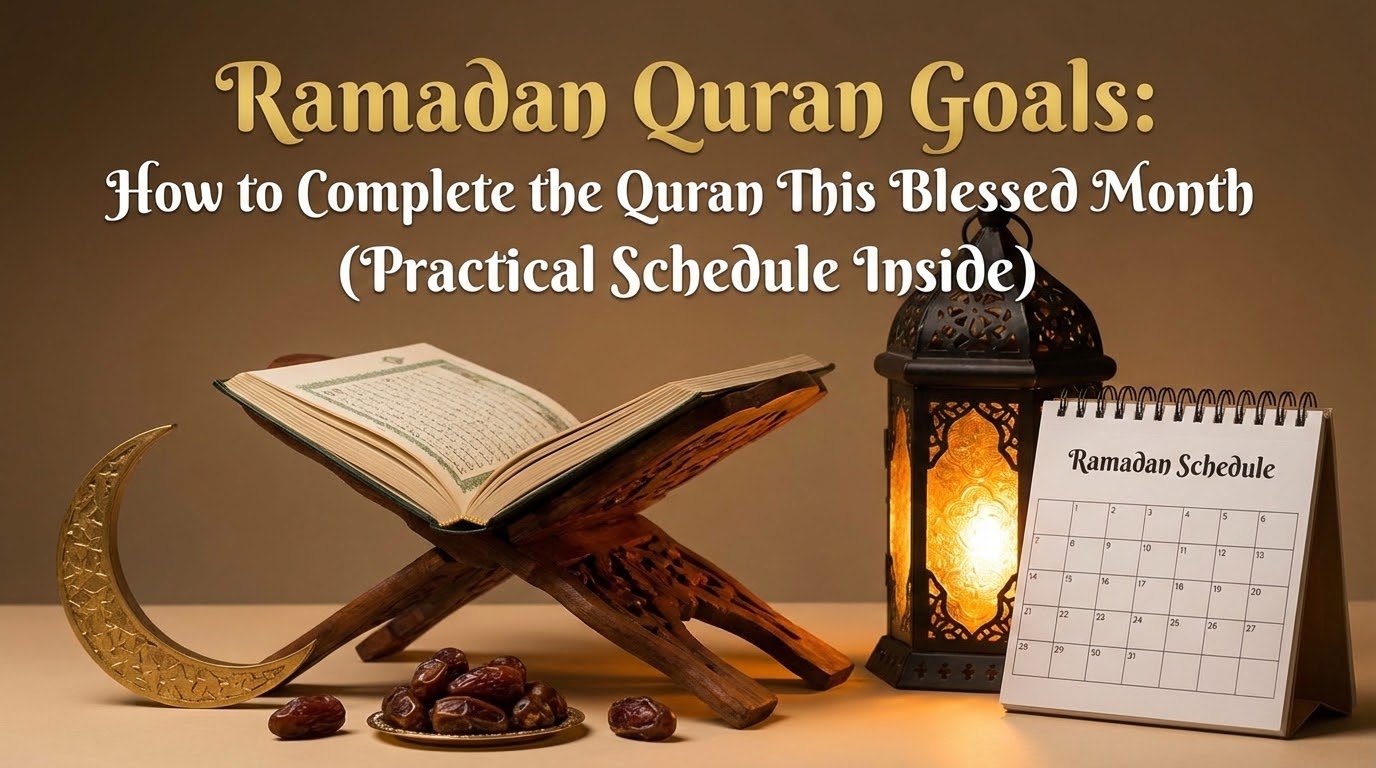

Ramadan is here the month when the Quran was revealed, when the gates of Paradise open, and when every good deed is multiplied manifold. For Muslims worldwide, completing at least one full reading of the Quran during these 30 blessed days is a cherished goal. But between fasting, Taraweeh prayers, family obligations, and work, how do you realistically achieve this spiritual milestone?
This comprehensive guide provides practical strategies, realistic schedules, and proven methods to help you complete the Quran during Ramadan whether you’re a beginner struggling with Arabic or an experienced reader seeking deeper engagement with the text.
Why Completing the Quran in Ramadan Matters
The connection between Ramadan and the Quran is profound and inseparable. Allah says in Surah Al-Baqarah: “The month of Ramadan in which was revealed the Quran, a guidance for mankind and clear proofs for the guidance and the criterion” (2:185). This month isn’t just about abstaining from food and drink it’s fundamentally about reconnecting with divine guidance.
The Prophet Muhammad (peace be upon him) would review the entire Quran with Angel Jibreel every Ramadan, and in his final year, they reviewed it twice. The Sahaba understood this emphasis deeply. Abdullah ibn Amr reported that the Prophet advised him to complete the Quran once every month, though for Ramadan specifically, many scholars recommend completing it at least once, if not multiple times.
Completing the Quran during Ramadan transforms your relationship with Allah’s words. These aren’t just verses you’ve read they become verses you’ve journeyed through during the most spiritually charged days of your year. The discipline required builds consistency that often extends beyond Ramadan, establishing lifelong habits of Quranic engagement.
Beyond spiritual rewards, there’s immense personal satisfaction in reaching the final verses of Surah An-Nas on the last days of Ramadan, knowing you’ve traversed all 114 surahs and over 6,000 verses. This accomplishment builds confidence in your ability to set and achieve meaningful Islamic goals.
Understanding Your Current Reading Level
Before setting your Ramadan Quran goals, honestly assess your current reading ability. This isn’t about judgment it’s about creating a realistic, achievable plan that sets you up for success rather than frustration. Your strategy will differ significantly based on whether you’re a fluent Arabic reader, someone who reads slowly with effort, or a complete beginner still learning basic letters.
For fluent Arabic readers who can recite smoothly with good Tajweed, completing one Quran in 30 days requires reading approximately 20 pages (one juz) daily, which takes roughly 45-60 minutes. This is absolutely achievable alongside your other Ramadan obligations, and many aim to complete the Quran multiple times during the month.
If you read Arabic but slowly, with frequent pauses to decode words, completing the Quran becomes more challenging but not impossible. Your daily reading might take 2-3 hours for one juz, which is difficult to sustain daily. Consider alternative goals: completing half the Quran, focusing on shorter surahs with deep understanding, or dedicating Ramadan to improving your reading speed for future years.
For beginners who are just learning Arabic or struggle significantly with Quranic text, this Ramadan might be better focused on building foundational skills rather than completion. Setting a goal to master basic Tajweed rules or consistently reading one page daily with proper pronunciation creates momentum for future Ramadans while preventing discouragement from unrealistic targets.
The Daily 20-Page Method: Breaking Down Your Goal
The most common approach to completing the Quran in Ramadan is the daily 20-page (one juz) method. This divides the 600-page Quran into 30 equal portions, perfectly matching the 30 days of Ramadan. While straightforward in theory, successful implementation requires strategic planning around your daily schedule.
The key is distributing these 20 pages throughout your day rather than attempting them in one sitting. Many Muslims find success dividing their daily reading into four sessions: 5 pages after Fajr, 5 pages before Dhuhr, 5 pages in the afternoon, and 5 pages before or after Taraweeh. This distribution prevents fatigue and integrates Quran reading naturally into your day’s rhythm.
After Fajr provides exceptional focus and spiritual clarity. The house is quiet, your mind is fresh from sleep, and the barakah of pre-dawn prayer time enhances your recitation. Many find these 5 pages the easiest and most spiritually fulfilling of the day. Even if other sessions fall short, maintaining your Fajr reading keeps you on track.
The afternoon or pre-Maghrib session can be challenging due to fasting fatigue. This is an excellent time for the 5 pages between Dhuhr and Asr when you might have a work break or quiet moment. If afternoon reading feels difficult, consider listening to Quran recitation during this time and doing your actual reading during the more alert post-Iftar period.
Post-Taraweeh reading, while you’re already in a spiritual state, works well for many people. Others prefer reading before Taraweeh to enter prayer having already engaged deeply with Quranic text. Experiment during the first few days to find what works best for your energy levels and schedule.
Making Ramadan Your Quran Learning Breakthrough
For those who struggle with Arabic reading, Ramadan presents a unique opportunity to accelerate your learning. The increased time for worship, heightened spiritual focus, and community atmosphere create ideal conditions for intensive skill development. Rather than viewing your current level as a barrier, see it as your starting point for transformation.
Enrolling in structured Quran reading courses at the beginning of Ramadan maximizes this blessed month’s learning potential. Daily lessons combined with independent practice can dramatically improve your reading fluency within 30 days. Many students report reading 3-4 times faster by the end of Ramadan compared to the beginning.
At AlBadry Academy, we’ve designed our programs specifically understanding the reality of busy Muslims trying to balance multiple Ramadan obligations. Our flexible scheduling means you can choose lesson times that fit around your fasting, work, and family commitments. With options ranging from 1 day per week ($19.99/month – 4 classes monthly) for those wanting gentle progress, to daily lessons (7 days per week at $114.99/month – 28 classes monthly) for intensive learners, you can select the pace that matches your goals and availability.
The current 20% discount makes this Ramadan the perfect time to invest in your Quranic skills. Imagine entering next Ramadan as a confident reader, able to complete the Quran independently. That transformation begins with your commitment today. Every student receives a free trial class, allowing you to experience our teaching methodology before committing.
Combining Reading with Understanding: The Tafsir Approach
Reading the Quran in Arabic carries immense reward, but combining reading with understanding multiplies the impact on your heart and daily life. This doesn’t mean you must understand every word—even basic awareness of surah themes and major messages transforms your recitation from mechanical reading to meaningful engagement.
A practical approach is reading your daily portion in Arabic first, then spending 10-15 minutes reviewing a brief Tafsir (explanation) of what you’ve read. Apps and websites provide concise English explanations that don’t require extensive time but significantly deepen your connection to the verses. Focus particularly on practical application how do these verses apply to your life, relationships, and challenges?
Quran Tafseer courses provide structured understanding that enhances every future reading. While completing a full Tafsir course during Ramadan alongside Quran reading might be ambitious, even starting the course helps you develop the framework for understanding Quranic themes, context, and application.
Consider dedicating one day per week during Ramadan to deeper study rather than just reading. On Fridays, for example, instead of rushing through 20 pages, spend your time with 5 pages but study them thoroughly read the Tafsir, understand the historical context, reflect on personal application, and even memorize a verse or two. This balanced approach ensures both completion and comprehension.
Leveraging Taraweeh Prayers for Quran Completion
Taraweeh prayers offer a beautiful opportunity to engage with the Quran while earning tremendous reward. In mosques where the full Quran is recited over the 30 nights, you’re hearing the entire Quran even if your personal reading falls short. However, actively listening and following along in your mind rather than letting the recitation be background transforms Taraweeh into a meaningful part of your completion goal.
Some Muslims count Taraweeh recitation as part of their daily goal. If you pray in a mosque where 20+ pages are recited nightly, and you’re actively listening with understanding of what’s being recited, this contributes to your Quran engagement even if it’s through listening rather than personal reading. The Sahaba learned much of the Quran through listening to the Prophet’s recitation.
For those who lead Taraweeh or pray at home, use this opportunity to recite from your memorized portions. This serves dual purposes: maintaining your Hifz and progressing through the Quran during prayer. The spiritual state of Taraweeh often makes recitation feel more meaningful than daytime reading, and the physical act of prayer combined with recitation creates stronger memory connections.
If you’re working on Quran memorization, Ramadan provides exceptional momentum. The increased spiritual focus, frequent repetition through prayers, and community encouragement make memorization feel less burdensome. Even memorizing just one page per day throughout Ramadan means completing an entire juz a significant accomplishment that becomes a permanent treasure.
Special Ramadan Schedule for Working Professionals
For professionals maintaining work schedules during Ramadan, completing the Quran requires strategic time management. The key is identifying pockets of time throughout your day and utilizing technology to maximize these moments. Your Ramadan Quran journey might look different from someone with flexible schedules, but it’s absolutely achievable.
Morning commutes offer perfect opportunities for Quran engagement. If you drive, listen to recitation with translation, mentally following along. This isn’t as spiritually rewarding as personal recitation, but it keeps you connected to the Quran during time that would otherwise be lost. For public transportation users, reading on your phone or carrying a small mushaf makes commute time productive.
Lunch breaks, even if just 20 minutes, provide quiet focused time for reading. Many working professionals find this midday session essential for staying on track. Rather than scrolling through social media, dedicate this time to 4-5 pages of recitation. The mental break from work combined with spiritual engagement often improves afternoon productivity.
Post-Iftar and pre-Taraweeh time, though short, offers another reading opportunity. After breaking fast and performing Maghrib, sitting with the Quran before preparing for Taraweeh creates a spiritually rich transition. Even 15 minutes yields 3-4 pages, contributing significantly to your daily goal.
Weekend days during Ramadan should be maximized. Without work obligations, dedicate larger blocks to Quran reading. Completing 2-3 juz on Fridays and Saturdays compensates for potentially lighter reading during busy weekdays, keeping your overall monthly goal achievable.
Family Quran Goals: Reading Together This Ramadan
Ramadan provides exceptional opportunities for family Quran engagement. Rather than everyone pursuing individual goals in isolation, creating shared experiences builds spiritual unity and establishes lifelong Islamic habits in children. Family Quran time becomes a cherished Ramadan memory that children carry into adulthood.
For families with young children, reading aloud together after Iftar creates a beautiful routine. Parents can take turns reciting while children listen, or for those learning Arabic, each family member reads a few verses. Even if children don’t understand Arabic fully, exposure to Quranic recitation in a loving family context builds positive associations.
Older children capable of independent reading can participate in family challenges. Set collective goals “Our family will complete 5 full Qurans this Ramadan” and track progress together. This transforms individual effort into a team endeavor where everyone’s contribution matters. Children often surprise parents with their dedication when motivated by family participation.
Online Quran classes for kids and Arabic classes during Ramadan capitalize on children’s increased spiritual awareness. Many parents report that Ramadan enrollment leads to year-round consistency because habits established during this blessed month persist afterward. The combination of fasting, increased worship, and Quran learning creates powerful character development.
AlBadry Academy’s family-friendly scheduling allows multiple family members to learn at times that fit your household routine. With 2-day weekly plans ($34.99/month) or 3-day plans ($49.99/month), children can maintain school schedules while advancing their Quran skills. Parents often enroll alongside children, creating a beautiful dynamic where the family learns together.
Overcoming Common Obstacles and Maintaining Consistency
The first few days of Ramadan often begin with high motivation and easy consistency. The challenge comes around day 10-15 when initial enthusiasm wanes, work pressures mount, or fatigue from altered sleep schedules affects your energy. Understanding these predictable challenges and having strategies ready helps you push through rather than abandon your goal.
Physical fatigue from fasting affects reading stamina. Your eyes might tire more quickly, focus wavers, and sitting for extended reading feels more difficult. Combat this by ensuring adequate rest, even if it means napping briefly before Taraweeh. Well-rested reading, even if shorter, proves more effective than lengthy sessions where you’re merely staring at words without engagement.
Unexpected events family gatherings, illness, work deadlines will inevitably disrupt some days. Rather than viewing these as failures, build flexibility into your plan. If you miss your target one day, avoid the “all or nothing” mindset that leads to complete abandonment. Simply continue the next day, perhaps reading a few extra pages over the weekend to compensate.
Accountability partners dramatically improve consistency. Whether a spouse, friend, or online community, having someone who knows your goal and regularly checks progress makes abandonment less likely. Many Muslims join Ramadan Quran completion groups on social media or through their local mosques, providing both accountability and encouragement.
For those struggling with Arabic, frustration is the biggest obstacle. When reading feels like a grinding chore rather than spiritual nourishment, motivation disappears quickly. This is exactly why investing in proper Quran learning transforms your experience. Reading with confidence and correct Tajweed makes Quran engagement joyful rather than burdensome.
The Last Ten Nights: Intensifying Your Quran Connection
As Ramadan’s final third approaches, particularly the last ten nights when Laylatul Qadr (the Night of Power) occurs, intensify your Quran engagement. If you’re on track with your completion goal, these nights offer opportunities to read additional portions, deepen your understanding through Tafsir, or focus on memorizing particularly meaningful verses.
The Prophet (peace be upon him) would exert himself more during the last ten nights than any other time, often staying awake in worship throughout the night. While completing your daily Quran portion, use extra time for reflection and contemplation. Slow, thoughtful recitation of even a few pages, pondering each verse’s meaning and application, often provides more spiritual benefit than rushing through many pages.
For those who’ve completed the Quran before the last ten nights, consider starting a second reading focused on different aspects. Perhaps your first reading emphasized quantity completing all 30 juz. Your second reading might emphasize quality reading with translation, making dua at relevant verses, and deeply reflecting on meanings.
These final nights also offer your last opportunity to compensate for any shortfalls earlier in the month. If you’re behind on your completion goal, the spiritual momentum and often lighter work schedules during this period allow for catch-up. Many Muslims report completing significant portions during these nights when barakah multiplies every effort.
Beyond Ramadan: Maintaining Your Quran Connection
The habits and relationship you’ve built with the Quran during Ramadan shouldn’t end when Eid arrives. The most successful Ramadan is one that permanently elevates your baseline spiritual practice. If you’ve been reading 20 pages daily during Ramadan, transitioning to even 2-3 pages daily afterward represents a 10x improvement from your pre-Ramadan norm.
Set post-Ramadan goals during the last week of fasting. This might be completing the Quran every 2-3 months, reading one juz weekly, or dedicating 15 minutes daily to Quran regardless of how many pages that yields. Specific, measurable goals with clear timeframes succeed far more than vague intentions to “stay connected to the Quran.”
Structured Islamic studies programs help maintain momentum by providing regular accountability and continued learning. When Ramadan ends, your progress shouldn’t—it should simply shift from intensive to sustainable pace. Many students find that beginning a formal course during Ramadan and continuing afterward creates year-round consistency.
Consider enrolling family members in ongoing programs as well. Arabic learning for adults enhances Quran understanding, while children’s Islamic classes ensure the next generation grows up with strong Quranic foundations. These parallel learning journeys strengthen family bonds while building collective Islamic knowledge.
Choosing the Right Learning Support for Your Goals
Whether you’re a complete beginner wanting to read Quran for the first time or an experienced reader seeking to improve Tajweed and deepen understanding, professional guidance accelerates your progress dramatically. Self-study has its place, but structured lessons with qualified teachers identify and correct mistakes you might not notice independently.
AlBadry Academy offers comprehensive programs tailored to every level and goal. Our qualified teachers, many trained in traditional Islamic institutions, combine authentic knowledge with modern teaching methodologies. Every instructor undergoes rigorous screening to ensure both Islamic knowledge and teaching excellence.
Our flexible scheduling acknowledges the reality of modern Muslim life. You’re not restricted to rigid time slots that conflict with work, family, or other obligations. Choose the frequency that matches your commitment level and budget:
- 1 Day/Week ($19.99/month) – Perfect for busy professionals or those testing online learning, providing 4 monthly classes to build consistency without overwhelming schedules
- 2 Days/Week ($34.99/month) – The sweet spot for steady progress, offering 8 monthly classes that create noticeable improvement while remaining manageable
- 3 Days/Week ($49.99/month) – Accelerated learning with 12 monthly classes, ideal for those with moderate time availability wanting faster results
- 4 Days/Week ($69.99/month) – Serious commitment yielding 16 monthly classes, dramatically improving skills within months rather than years
- 5 Days/Week ($84.99/month) – Intensive program with 20 monthly classes for dedicated learners making Quran mastery a top priority
- 6 Days/Week ($99.99/month) – Near-daily engagement with 24 monthly classes, transforming your Quranic skills through immersive learning
- 7 Days/Week ($114.99/month) – Maximum commitment with 28 monthly classes, achieving in months what typically takes years
Every plan includes 30-minute sessions with one-on-one attention, ensuring you’re not lost in a crowd but receiving personalized instruction addressing your specific needs. Our current 20% discount makes this Ramadan the perfect time to invest in your Islamic education a gift to yourself that continues giving long after this blessed month ends.
Taking Action: Starting Your Ramadan Quran Journey Today
Ramadan waits for no one. Each day that passes without beginning your Quran journey is a day of irreplaceable blessings you can’t recover. Whether you start by reading one page or enrolling in a course to improve your skills, the important thing is starting now, not waiting for “perfect” conditions.
Book your free trial class with AlBadry Academy today. Experience our teaching methodology, meet our qualified instructors, and see firsthand how structured learning transforms your relationship with the Quran. There’s no obligation just an opportunity to glimpse what consistent, expert guidance could mean for your spiritual life.
For sisters seeking female teachers or specialized women’s Islamic classes, we provide comfortable, appropriate learning environments. Our diverse teaching staff ensures everyone finds an instructor whose style resonates with their learning preferences and spiritual needs.
This Ramadan can be the beginning of your permanent transformation from someone who struggles with Quran to someone who reads confidently and beautifully. From someone who avoids reciting in front of others to someone who leads family prayers. From someone whose mushaf collects dust to someone whose daily routine revolves around divine words.
The Quran was revealed in Ramadan. What better month to strengthen your connection with it? Start today, stay consistent, and by the time Eid arrives, you’ll look back on this Ramadan as the turning point in your spiritual journey.
May Allah accept your efforts, make the Quran spring of your heart, and grant you the strength to achieve your Ramadan goals. Ameen.
Make This Ramadan Your Quran Breakthrough
Don’t let another Ramadan pass without connecting deeply with the Quran.
Whether you’re a beginner struggling with Arabic or an experienced reader wanting to improve Tajweed and complete the Quran with confidence, AlBadry Academy is here to guide you.
With flexible schedules, qualified teachers, and personalized one-on-one sessions, you can finally achieve your Ramadan Quran goals and carry that momentum beyond Eid.
Start Your Free Trial Today20% discount available this Ramadan. No commitments. Just expert guidance.