


In Quran recitation, the voice sometimes touches the heart before its meaning hits the brain. You listen to a master Qari like Al-Minshawi or Abdul Basit and some weight settles over you in the recitation — overwhelming, merciful, numinous.
The sound, in this respect, is not an embellishment of the Quran. It carries its weight. This is the world a serious student of a Maqamat Course enters: not for performance, but disciplined beauty; not display, but a voice conditioned to serve Allah’s words with mastery, emotion and honor.
Courses in this field teach the main maqamat and their function for emotionally and spiritually enhancing recitation while maintaining tajweed.
And for numerous learners, this is the missing link. The recitation itself is accurate, but flat, monotonous or incomplete. Use of a Maqamat Course to be able to reveal a more natural vocal identity and where the melody belongs in tilawah, in the Azan, in the Nasheeds and in our heartfelt Duas; Maqamat tradition is widely taught with relation to Quran & Athan; structured courses traditionally begin with major modes such as Maqam Bayati, Rast, Nahawand & Hijaz.
This guide will cover the 8 maqamat quran students often learn and the effective process to confidently learn maqamat quran.
The Spiritual Power Of Sound
Quran recitation is not meant to be flat or careless. It carries meaning through sound, pauses, tone, and control. Tajweed guards the words. Melody gives the recitation warmth, shape, and emotional depth that listeners can feel almost right away.
That is why many learners start searching after hearing a moving recitation. They ask, “How does a reciter sound so calm, so steady, so touching?” Usually, the answer includes practice, listening, and a real understanding of how maqamat guide the voice.
What Is This Course And Why Do Learners Search For It
Most learners search because they want more than a pleasant voice. They want direction. They want to know what they are hearing, why one reciter sounds tender and another sounds strong, and how to build that control in their own recitation.
The Difference Between Correct Recitation And Beautiful Recitation
Recitation in the correct way is that the letters and rules, stops and pauses are all done properly. But beautiful recitation adds tone, balance and flow. This is like handwriting; clear writing gets the job done and readable indeed. But elegant writing powers an imprint without transmuting the message itself.
Where Maqamat Fit For Modern Learners
Today, many learners study from home, after work, or between family duties. They need a process that is very simple and supported. And that’s where structured teaching is more helpful, as the random clips might inspire you but they will almost never give a complete learning path.
What Are Maqamat In Quran
When people ask about a Maqamat Course, they are usually trying to understand maqamat in quran in plain language. A maqam is a melodic pattern or vocal mode used to beautify recitation while keeping the words, pronunciation, and tajweed rules fully intact.
Tajweed comes first. Always. Maqamat do not replace tajweed, and they should never push a student into showmanship. They simply help the reciter carry meaning with a voice that feels calm, fitting, and emotionally aware.
What “Maqam” Means In Simple Terms
A maqam is like a path your voice follows. It gives the recitation a certain color or mood. Some maqamat sound warm. Some sound reflective. Some feel weighty. The words stay the same, but the emotional tone can shift in a very noticeable way.
Are Maqamat Part Of Tajweed Or Something Different
They are different, though they work side by side. Tajweed protects correct recitation. Maqamat shape how the voice carries that recitation. A good teacher keeps this balance clear, so students do not confuse melody practice with rule-based reading.
Why Students Ask About Maqamat Early
Beginners often hear terms like Bayati, Hijaz, or Rast and feel a little lost. That is normal. Once the idea is explained simply, the subject feels much less intimidating, and students can start listening with purpose instead of guessing.
If you found this guide helpful, read our latest blog, “What is tajweed and why does every muslim need to learn it,” to build a stronger foundation for clear and correct Quran recitation.
The 8 Maqamat Quran Every Beginner Should Know
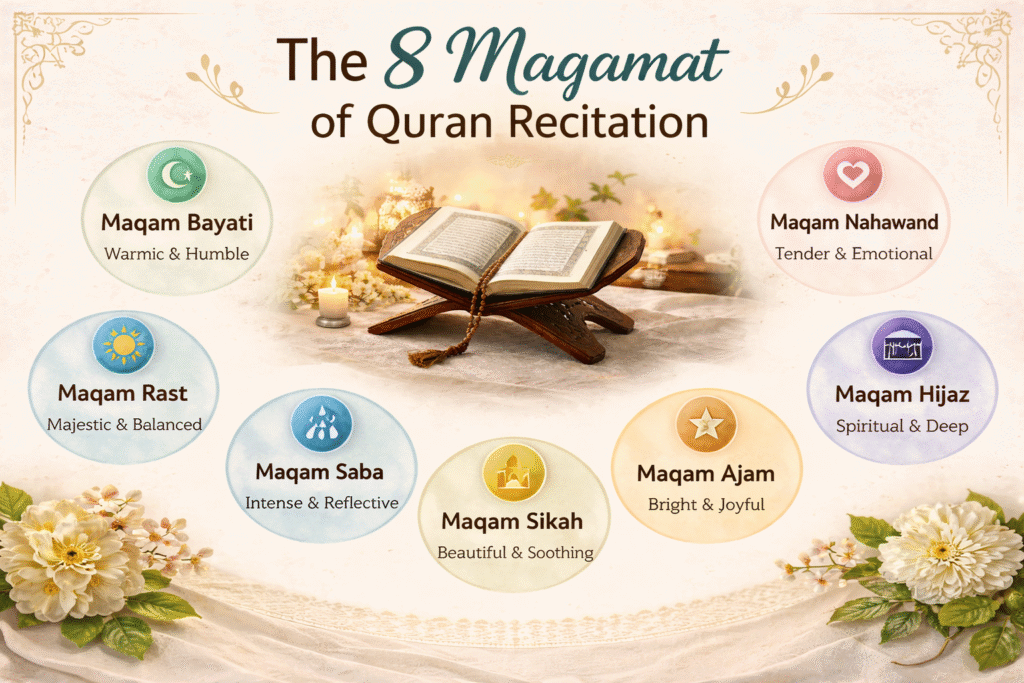
The phrase 8 maqamat quran usually refers to the main melodic modes many teachers introduce first. You do not need to master all of them in a week. In fact, that would be like trying to learn eight musical moods before learning how to hold a steady note.
A better way is to learn what each maqam feels like, where it is often heard, and which ones suit beginners. Once you can hear the difference, practice becomes more focused. You stop wandering and start building skill, one step at a time.
| Maqam | General Feel | Common Use In Recitation | Beginner Note |
| Maqam Bayati | Warm and welcoming | Openings, calm verses, familiar flow | A gentle place to begin |
| Rast | Balanced and steady | Strong, grounded passages | Good for voice control |
| Nahawand | Tender and reflective | Verses of thought and softness | Easy to recognize with practice |
| Hijaz | Deep and stirring | Serious, emotional passages | Distinct sound, but needs control |
| Saba | Sad, weighty, intense | Verses of warning or grief | Harder for beginners |
| Sikah | Warm and intimate | Personal, close vocal feeling | Needs careful listening |
| Ajam | Bright and uplifting | Hopeful, open passages | Clear and noble in tone |
| Kurd | Soft and simple | Smooth, plain vocal delivery | Useful for calm practice |
Maqam Bayati: The Gentle Starting Point
Maqam Bayati is often the first love of new learners. It feels warm, natural, and close to the ear. Many students find it easier to repeat because it does not ask for too much drama. It invites steadiness before it asks for range.
Maqam Rast: Strength, Balance, And Steadiness
Rast often sounds firm and settled. It gives the voice a sense of order, almost like standing straight after slouching all day. For students who drift off pitch, Rast can help build discipline because it asks the voice to stay centered.
Maqam Nahawand: Tenderness And Reflection
Nahawand has a meditative feel and is good to recite by itself. Have the ability to stay strong and soft at the same time. It can be enjoyable for learners because it sounds expressive, but also provides space for control. At times emotional, but not very heavy.
Maqam Hijaz: A Deep And Stirring Sound
Many listeners immediately recognize the sound of hijaz; there is something striking about it. It is serious and powerful and moving all at the same time. However, beginners should not jump onto it too soon. When the throat gets tight, the beauty goes to pieces and strain take over.
Maqam Saba: Seriousness And Emotion
There is a heaviness that Saba has that almost feels intense. Commonly associated with doom, gloom, and contemplation. As a result, it is not always one of the first maqam that teachers assign to beginners, yet this maqam illustrates how emotion can dwell within tone.
Maqam Sikah: Warmth And Familiarity
Somehow, Sikah feels intimate — like someone speaking quietly to you in the next room. It sounds pretty intimate, warm and very human. This is where students need to listen closely, as the magic of Sikah often resides in quiet shifts rather than grand dramatic leaps.
Maqam Ajam: Brightness And Lift
Ajam often sounds open and uplifting. It can carry a noble feeling that suits hopeful or expansive moments in recitation. For some learners, it feels easier than expected. For others, it needs patience so the brightness does not turn stiff.
Maqam Kurd: Soft Simplicity For Smooth Recitation
Kurd is often described as simple, soft, and smooth. That simplicity is part of its charm. It does not try too hard to impress the ear. Instead, it teaches the student how a calm voice can still carry beauty and presence.
Why Learn This Course Online
A good Maqamat Course gives more than information. It gives sequence, correction, and a teacher who can hear what you cannot hear yourself. That matters because melody work is deeply practical. You are training the ear, the breath, and the voice at the same time.
Many people begin with clips and playlists, and that is fine for exposure. Still, serious progress usually comes from guided study. Students looking for maqamat quran courses online often want steady lessons, live feedback, and a simple path they can follow each week.
Why Videos Alone Are Not Enough
Watching strong reciters can inspire you, but it can also create false confidence. You may think you copied the sound well, while your pitch slipped or your breath broke halfway through. Without correction, small mistakes quietly become habits.
What Good Online Lessons Usually Include
Good classes usually include listening drills, maqam recognition, guided repetition, teacher correction, and practice on selected verses. Some also include recording review, homework, and feedback on transitions. That mix helps students move from admiration to actual skill.
Why Live Feedback Changes Everything
Live feedback saves time. A teacher can stop you at the exact moment your tone drops, your breath tightens, or your transition sounds forced. That kind of correction is hard to replace. It is like having a mirror for the parts of your voice you cannot see.
To deepen your understanding of Quranic recitation after this guide on Maqamat, read our latest blog, “What are the 10 qiraat of the quran a clear guide for curious muslims”.
Beyond Recitation: Where Else Maqamat are Used
Maqamat are often linked first with Quran recitation, and rightly so. Still, their use is wider than many beginners think. Once students understand the patterns, they begin to notice similar vocal colors in other forms of Islamic vocal expression as well.
That wider view gives the topic more life. It also helps the learner hear maqamat as living patterns, not dry labels from a lesson sheet. You start noticing them the way a trained ear notices rhythm in speech or melody in a familiar call.
How Maqamat are Heard in Azan
The Azan often carries clear melodic movement, and maqamat help shape that effect. A well-delivered call to prayer can sound solemn, beautiful, and inviting without becoming theatrical. When students listen closely, they begin to hear familiar maqam colors in it.
How Maqamat Shape the Feeling of Duas
Duas are not sung like songs, yet tone still matters. A voice filled with humility, hope, or grief can affect the heart deeply. Maqamat help students understand how certain vocal paths support those feelings without crossing the bounds of respect.
Why Nasheed also Uses Familiar Patterns
Many nasheeds use melodic patterns that feel familiar to students of maqamat. The setting is different, of course, but the ear may still notice similar rises, pauses, and emotional tones. That connection helps learners recognize maqamat beyond one single setting.
How to Learn Maqamat Quran Step by Step
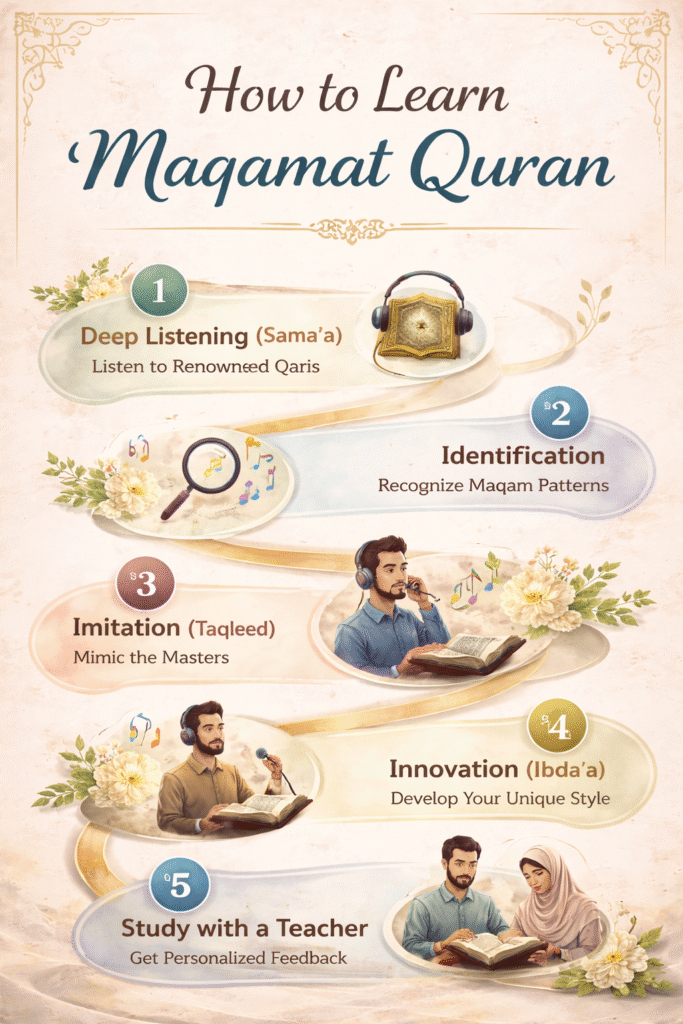
If you are asking how to learn maqamat quran, start small and stay patient. This subject rewards steady ears more than quick excitement. A student who listens carefully and practices one skill at a time often improves faster than someone who jumps between styles every day.
Think of it like learning to cook from an elder in the kitchen. First, you watch. Then you copy. Then you make mistakes. Then one day, your hands begin to remember. Voice work grows in much the same quiet, gradual way.
- Listen Before You Imitate: Spend time hearing strong reciters and identifying one maqam at a time before trying to copy them.
- Start with Bayati and Hijaz: These two help many learners hear contrast more easily and begin recognizing tonal differences.
- Practice One Pattern at a Time: Mixing too many sounds early makes progress messy and frustrating.
- Study with Correction: A teacher can catch pitch, tension, and awkward transitions much faster than self-study can.
- Build Control Gently: Never push the throat for a dramatic sound. Calm control lasts longer and sounds better.
Learn To Listen Like A Student, Not Just A Fan
Many people enjoy recitation without knowing what they are hearing. That is a beautiful starting point, but learning asks for more. Try asking specific questions: Which maqam is this? Where did the tone shift? Why did that passage feel so moving?
- Build Recognition Before Performance: Before model recitation comes recognition. If you train your ear to pick out common patterns, then practicing becomes a whole lot less random. For example, you learn the road signs before learning how to drive. And even if you move slowly at first, but now you know where you are heading to.
- Respect Your Voice While You Practice: Every voice has different ranges and you need to understand that when you practice, Respect Your Voice. Students tend to think that a regular voice equates to weak results. It does not. So a clear, controlled, genuine but passionate voice is way better than a tensed voice trying to sound impressive.
Common Challenges Students Face
This is where a Maqamat Course does wonders. The topic is too hard. Most learners would not fail, because the assignment is far too difficult. But why is that the case? They do not get enough or correct practice, and some mix patterns, while others try to push the voice too early losing confidence.
The bright part about this is, these issues are quite standardized. If you struggle with the larynx dropping, wobbly breath, or one maqam running into another;you are not alone. These are normal learning bumps, and they can be corrected with calm, guided repetition.
- Trouble Staying On One Maqam: Beginners often begin in one vocal mode and drift into another without realizing it. This happens when the ear is not yet trained. Teachers usually fix this by slowing the lesson down and asking the student to repeat short lines again and again.
- Weak Breath Control And Vocal Tension: A tight throat can ruin even a lovely voice. So can short, uneven breathing. Students sometimes chase emotion so hard that they forget the body still needs calm support. Breath work, pacing, and posture often solve more than people expect.
- Mixing Tajweed Rules With Melody Practice: Some learners panic when trying to do both at once. They worry about letters, lengthening, melody, and breath all in the same moment. The answer is not speed. The answer is order: keep tajweed steady first, then add melody with care.
- Rough Transitions Between Maqamat: Moving between maqamat without sounding sudden takes time. If a reciter changes tone too sharply, the flow can feel broken. Good teachers help students hear where a shift belongs, how small it should be, and when staying in one maqam is wiser.
FAQs
What Is The Best Maqam For Beginners?
Bayati is often the best starting point for beginners. It sounds natural, feels warm, and is usually easier to repeat than heavier maqamat. That makes it a comfortable first step for students still building pitch control.
Is Maqam Bayati The Easiest Maqam To Start With?
For many learners, yes. Maqam Bayati is easier to hear and imitate than some other maqamat. It gives beginners a calm entry point and helps them build confidence before trying more emotionally heavy or technically demanding tones.
How Long Does It Take To Learn The 8 Maqamat Quran?
It depends on the student, the teacher, and the practice routine. Some learners begin recognizing the main maqamat within weeks. Real control, though, usually takes longer because listening, breath, and repetition all need steady practice.
Can I Learn How To Learn Maqamat Quran If My Voice Is Average?
Yes, absolutely. You do not need a rare or dramatic voice to learn well. You need patience, listening, and good correction. Many students with ordinary voices make strong progress because they practice consistently and avoid forcing the sound.
Are Maqamat Quran Courses Online Good For Adults And Beginners?
Yes, they can be very good for both. Adults often prefer scheduled lessons they can attend from home, and beginners do well when they receive live correction. A clear teaching order makes the subject feel far less confusing.
A Warm Way To Begin
Beautiful recitation does not come from talent alone. It grows through listening, practice, correction, and sincere effort.
When you understand maqamat, your recitation begins to carry more feeling and balance. It does this without leaving the rules of tajweed behind. That is the real beauty of learning this art well. It helps you read the Quran in a way that touches the ear and heart.
Are you still feeling stuck with a flat tone or unsure where to begin?
That is why guided learning matters so much. A good teacher helps you hear the difference, steady your voice, and grow with confidence.
Why stay uncertain when steady practice can change how your recitation feels?
If you are ready to move from guessing to real progress, book a free trial class today.
Then explore our Maqamat Course and start building a voice that sounds clear, natural, and full of meaning.