

How to Choose Online Quran Classes for Kids in the USA: Time Zones, Teachers and Safety Checklist
Your son finishes school at 3:15. Soccer is on Tuesdays. The weekend Islamic school near you has a waitlist, and the masjid is a 40-minute drive in traffic. Sound familiar?
We hear this story from American parents almost every day. Online classes can solve it. But only if you choose well. So here is the same checklist we would want if it were our own child.
Why Are So Many US Families Moving Their Kids to Online Quran Classes?
It usually comes down to three problems. Distance, time and fit.
- Distance: a family in a small town in Ohio or Kansas may have no Quran teacher nearby at all.
- Time: in big metro areas like Dallas, Houston or Northern Virginia, rush-hour driving can eat a whole evening.
- Fit: even in strong communities, like Dearborn near Warren Avenue or Bridgeview near Harlem Avenue, group classes can move too fast or too slow for one child.
A good online class brings a one-on-one teacher into your living room. No car. No waitlist. Lessons move at your child’s pace.
What Class Times Work Best for Kids in Each US Time Zone?
Here is the first thing to ask any academy: “Can you teach at the time that suits my child, every single week?” Some cannot. Their teachers are only free at odd hours, and your child ends up learning when they are tired.
At Albadry Academy, our teachers are available 24/7. Whether you live in New York, Chicago, Dallas, Denver or Los Angeles, you choose the time and we fit around it. Any hour, any day, in your own time zone.
To help you decide, here is how different families usually think about it:
| Your child’s routine | Time of day that often fits | Why it works |
|---|---|---|
| Early riser, busy afternoons | Before school | A fresh mind and a quiet house |
| Needs a break after school | Late afternoon, after a snack | Calm, fed and ready to focus |
| Packed weekdays with sports or homework | Evening, after dinner | The day’s work is done |
| Full school week, free weekends | Saturday or Sunday | Longer focus with no rush |
| Parents work shifts or travel | Any hour that suits your family | We teach around the clock |
These are just ideas, not fixed slots. Tell us your preferred time and we will match it.
Morning kids learn best before school. Others need a snack and a short break first. You know your child. Pick the time when they are most awake, not the time that is left over.
Will Your Child’s Class Time Change When Daylight Saving Time Starts or Ends?
It should not. US clocks move on the second Sunday in March and the first Sunday in November. A good academy keeps your class locked to your local time, so 4:30 PM stays 4:30 PM. Families in most of Arizona do not change their clocks at all, which is worth mentioning when you book.
- Ask the academy to confirm your class in your own time zone.
- Check your schedule the week the clocks change.
How Can You Tell if a Quran Teacher Is Right for Your Child?
A great reciter is not always a great kids’ teacher. Look for both skills.
- Real credentials: ask if the teacher holds an Ijazah, a license to teach Quran that traces back through a chain of teachers. Our guide What Is a Quran Ijazah and Is It Worth Pursuing? explains why it matters.
- Training for kids: teaching a 6-year-old is not the same as teaching an adult. Ask if the teacher holds a certificate in teaching children.
- Clear English: your child should understand every instruction, without needing you to translate.
- Male or female choice: many families prefer a female teacher for girls or young kids. You should be able to ask for one.
What Should You Watch For in the Free Trial Class?
Sit nearby and just listen. Does the teacher smile? Do they correct mistakes gently, or does your child go quiet? Does the lesson feel like a real plan, or random reading? A child who asks “When is my next class?” is a very good sign.
Which Safety Checks Should Parents Make Before Booking?
This matters more than price. Please do not skip it.
| Check | Why it matters | What to ask |
|---|---|---|
| Lesson recordings | Lets you review any lesson | Are lessons recorded, and do you ask for my consent first? |
| Supervised communication | No private contact between teachers and your family or child | Is all communication handled by a supervision team? |
| Teacher vetting | You are trusting a stranger | How do you hire and check your teachers? |
| Child data | US law (COPPA) protects kids under 13 | What information do you collect about my child? |
- Keep the laptop in a shared room, like the kitchen or living room.
- Stay within earshot for the first few weeks.
- Tell your child they can always come to you if anything feels wrong.
How Long and How Often Should a Child’s Quran Class Be?
Short and steady beats long and rare. Young kids lose focus fast. That is normal, not a problem.
| Age | Class length | Classes per week |
|---|---|---|
| 4 to 6 | 30 minutes | 2 to 3 |
| 7 to 10 | 30 to 45 minutes | 3 to 5 |
| 11 and up | 45 to 60 minutes | 3 to 5 |
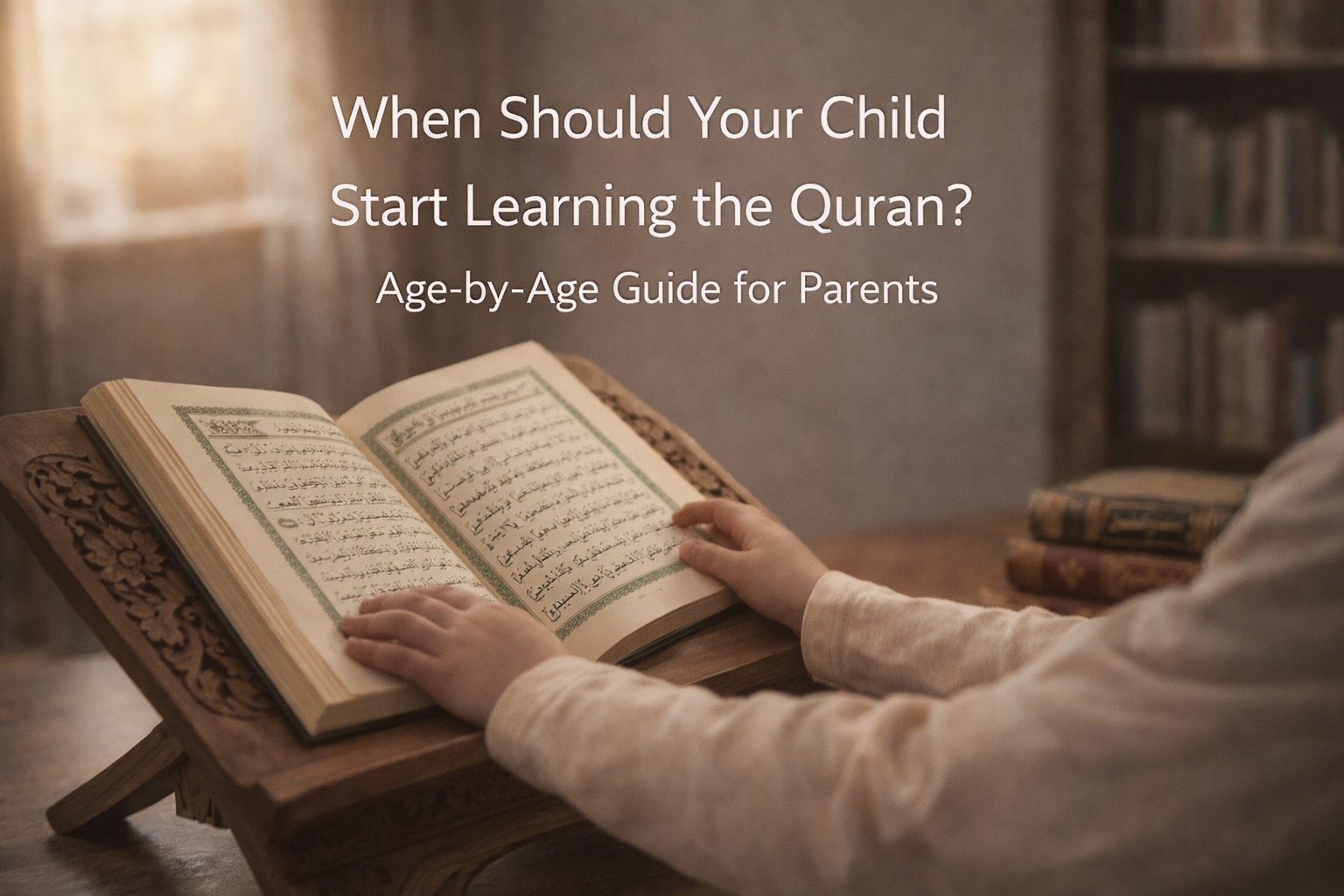
These are suggested starting points. Your child can also start with fewer classes per week than the numbers above, based on their needs and your family’s schedule. You can always add more later. Not sure your child is ready at all? Read our age-by-age guide to when kids should start learning the Quran.
How Does Albadry Academy Meet This Checklist for American Families?
We built our online Quran classes for kids around the questions above. Here is what your child gets:
- Live one-on-one lessons for children from age 4. Every class is individual, never a group.
- A clear five-level path: Reading Basics (starting with our Noorani Qaida course), Tajweed Fundamentals, Surah Recitation, Memorization, then Tafseer for Kids.
- Ijazah-certified male and female teachers who also hold certificates in teaching children. You can meet our teachers here.
- Every lesson recorded for revision, so your child can replay it and you can watch it. We ask parents for their consent before recording lessons.
- Safe, supervised communication. Teachers do not contact parents or children directly. All communication goes through our Academy supervision team.
- Monthly progress reports and a certificate when your child completes a level.
- Available 24/7, with make-up classes when you miss one.
Most young kids start on our 30-minute plans. Two days a week is $34.99 a month, and three days a week is $49.99 a month, at our current listed rates. See all options on our pricing page. Want more than Quran? Many families pair it with our Arabic classes for kids or Islamic classes for kids.
Ready to Book Your Child’s Free Trial Quran Class?
You do not have to decide everything today. Book a free trial class, sit beside your child, and see how it feels. If it is not right, you have lost nothing.
Message us on WhatsApp, or email info@albadryacademy.com. Tell us your city and your child’s age, and we will suggest a time that fits your family.
Frequently Asked Questions About Online Quran Classes for Kids in the USA
Are online Quran classes safe for kids?
Yes, when they use private links, consent-based recordings and supervised communication, as ours do.
What is the youngest age to start?
Children can start from age 4 with short 30-minute lessons.
Can I request a female teacher for my daughter?
Yes, you can choose a female teacher at any time.
Do I need to sit with my child during class?
It helps for young kids in the first few weeks, but it is not required.
What class times are available in the US?
We teach 24/7, so every US time zone and slot is covered.
Does my child need to know Arabic first?
No, beginners start from the Arabic letters with Noorani Qaida.
How can I try a class before paying?
Book a free trial class on our website, with nothing to pay.